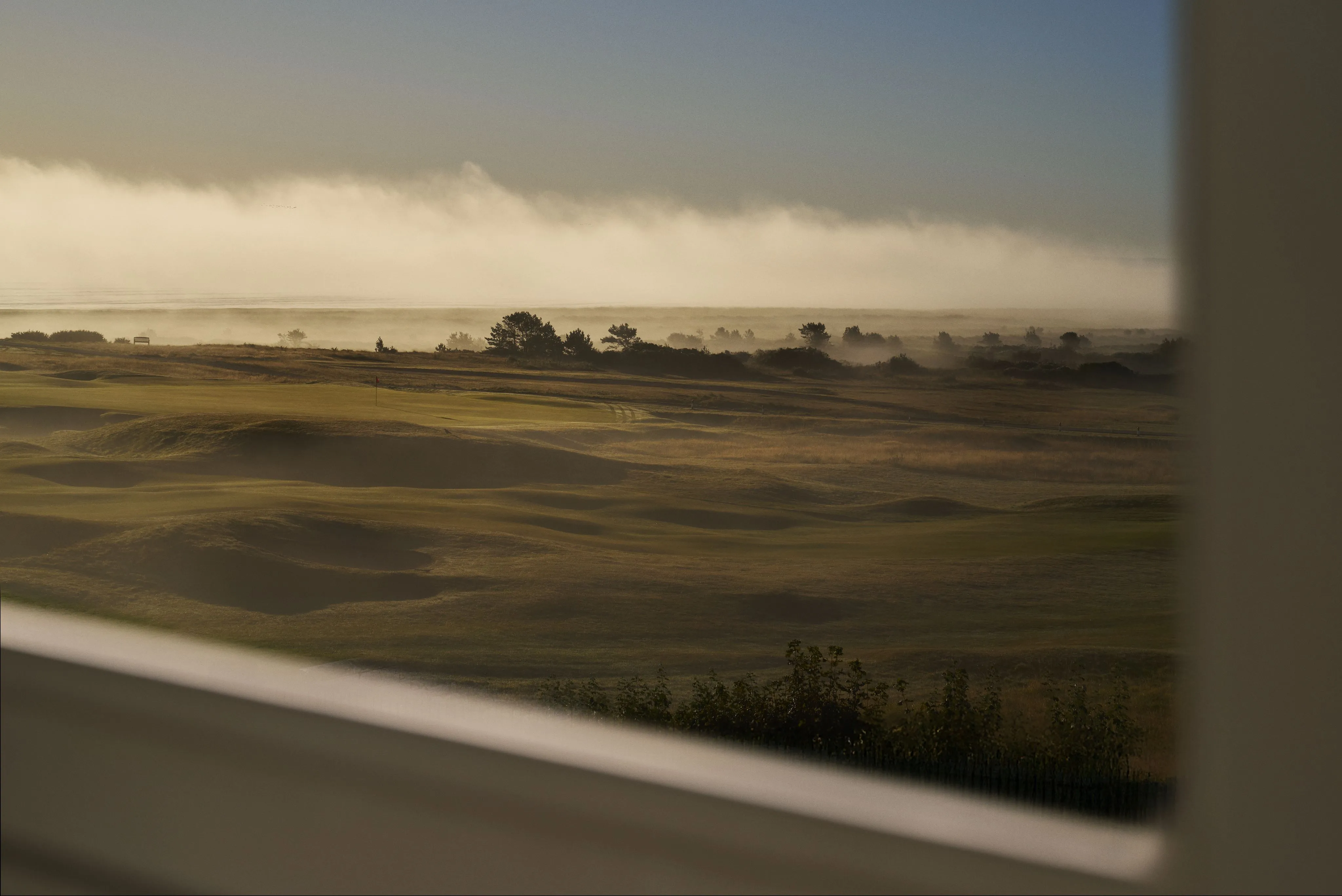
Overlooking the 18th
An untouched links landscape
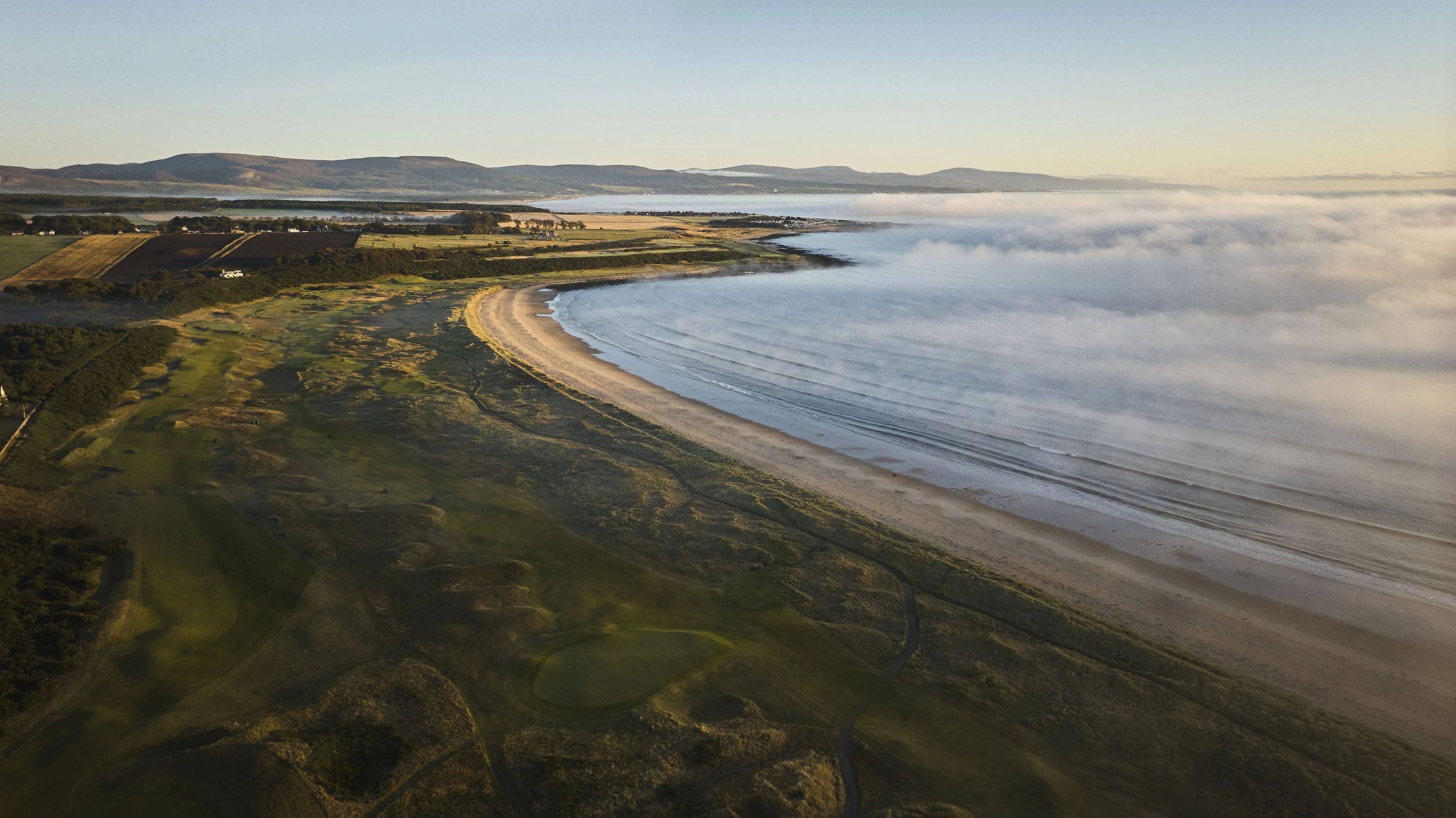
Royal Dornoch sits on classic linksland between the Dornoch Firth and rolling sand hills. Much of the course looks as if it has simply always been there.
The fairways flow naturally with the contours of the land, there is minimal rough shaping or artificial landscaping, and the course was formed by wind, sand, and sea, not bulldozers. The result is a beautifully organic, uncontrived feeling that modern courses are rarely able to replicate.
400 years and in its best shape
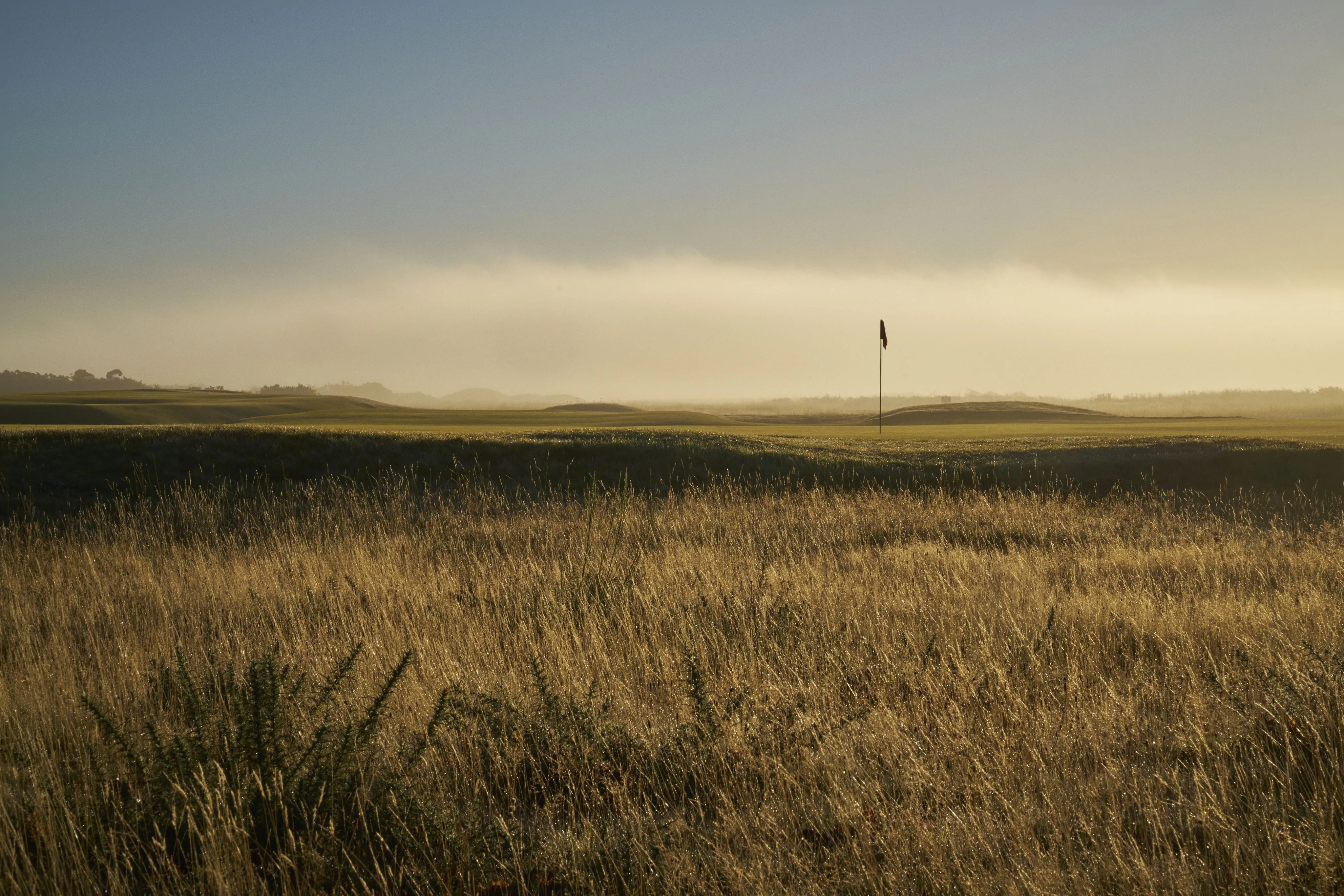
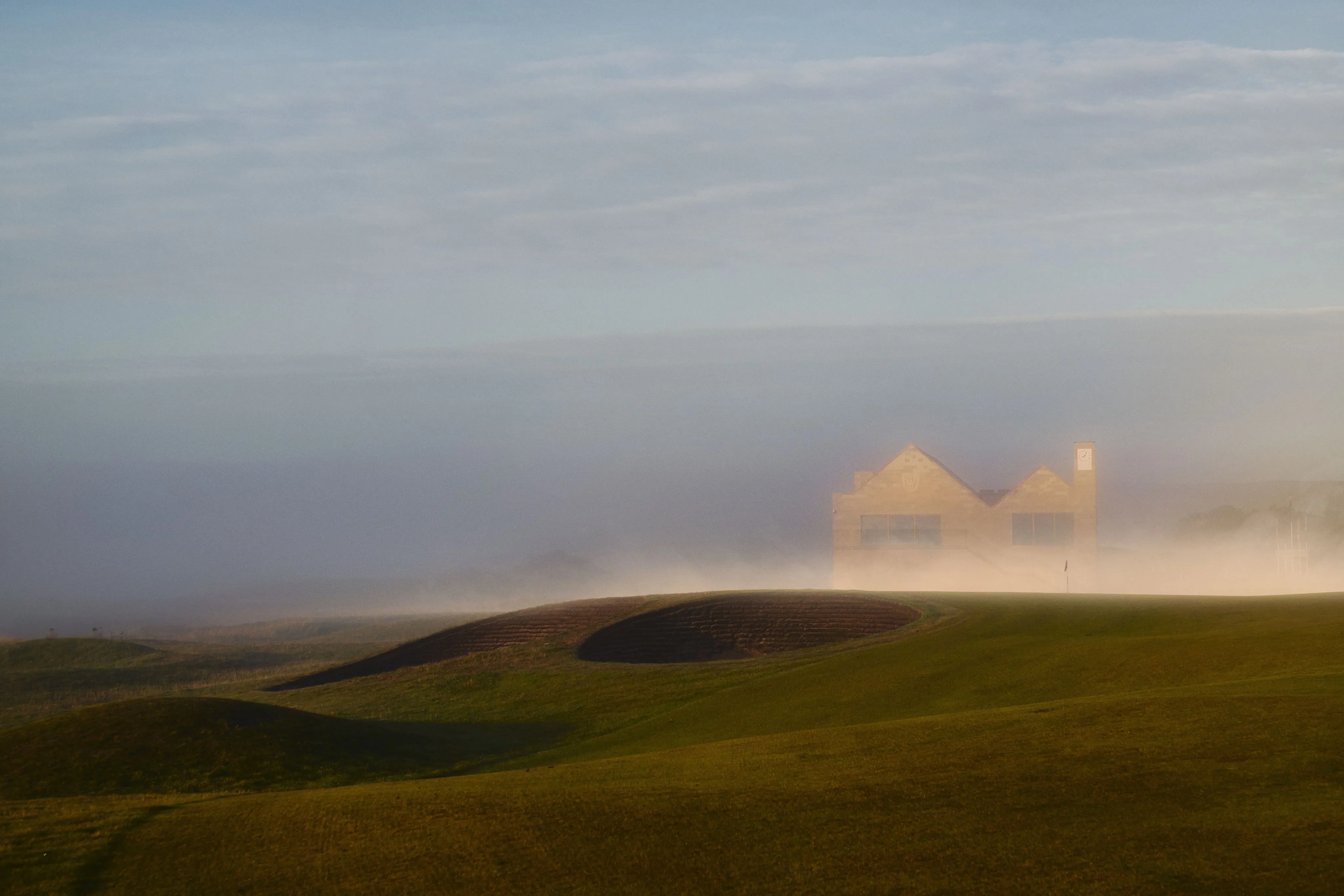
Records show that golf was played on the site of Royal Dornoch in the early 1600s, making it one of the oldest golf locations in the world. Players immediately sense that this is no modern championship course. This is partly because of its dramatic – even brutal – bunkers
around the naturally raised greens, but also because of its rolling fairway contours, natural plateaus and dips, and deceptive side-slopes. The ball is rarely on a truly flat lie.
Golf in the area
Besides the Championship and Struie courses at Royal Dornoch, the surrounding area is home to several other outstanding golf locations. Brora Golf Club offers a wonderfully authentic Highland links experience, while Golspie Golf Club, designed by James Braid, combines classic links play with sweeping coastal views. A short drive south, Tain Golf Club delivers a traditional seaside layout with wide fairways and fast, true greens — all set against the stunning backdrop of the Moray Firth. Other great courses in the area are Castle Stewart, Old Petty, Nairn and Fortrose & Rosemarkie.

The game changer
Built in 1896 as Abden House, the building was renamed in 1948—the same year Donald Ross passed away. While it is unclear whether the change was made in his honour, we are proud to share a name with one of Dornoch’s greatest figures.
Born in Dornoch in 1872, Ross was a Scottish-American golf course architect celebrated for his lasting influence on course design. He played a pivotal role in shaping the American golfing landscape in the early to mid-20th century. His first major project, Pinehurst No. 2 in North Carolina, opened in 1907, and over the course of his career he went on to design more than 400 courses. Ross was also apprenticed to Old Tom Morris, the primary architect of Royal Dornoch Golf Club, and contributed to the course’s refinement and development.
